

Mini-organs from space
Human tissue can be produced better in space than on Earth. Researchers of the UZH Space Hub have great expectations from it. A report by SRF.
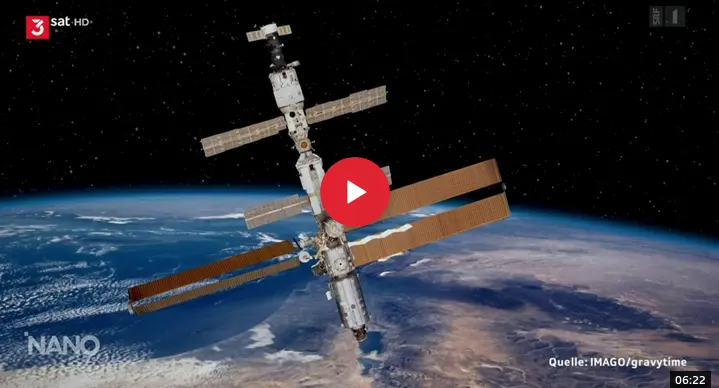
It sounds like science fiction. But it isn't. "Our vision is the routine production of mini-organs in zero gravity," says Cora Thiel of the UZH Space Hub. By mini-organs, she means human tissue, such as liver tissue or cartilage; by zero gravity, she means outer space.
Cells behave differently
It all started five years ago - at Dübendorf Airport near Zurich. So-called "parabolic flights" also take off from here. With a special climb and descent maneuver, weightlessness can be created for a very short time. Human stem cells, i.e. germ cells for human tissue, were also repeatedly on board. Thiel, a microbiologist, and her colleague Oliver Ullrich, a physician and director of the Space Hub, wanted to investigate whether the cells behave differently in the breeze of weightlessness than they do on Earth, where gravity keeps them flat.
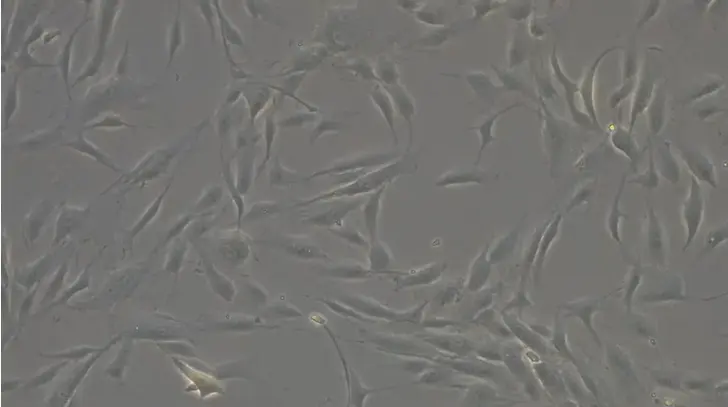
The stem cells behaved differently. So promisingly different, in fact, that Thiel and Ullrich wanted to bring their cells to the international space station, the ISS - in non-stop weightlessness.
Mini-organs on the ISS
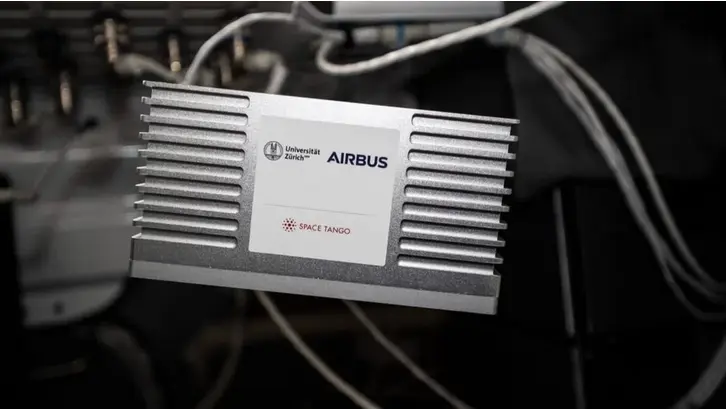
In the meantime, they have completed two ISS missions - in cooperation with the company Airbus. Most recently, 250 sample tubes were in zero gravity for four weeks. On Earth, the test tubes were filled with stem cells from the bone marrow of five donors and different nutrient solutions. They were then placed in a so-called bioreactor - a metal box about the size of a shoebox. The bioreactor was eventually sent from Florida to the ISS, where it was left untouched. "Worked on Earth," says Oliver Ullrich. "Hatched out in space."
The hatching was successful, as the evaluation in Zurich shows. "We had tissue fragments in all samples," Cora Thiel is pleased to report. The tissue pieces were a maximum of 1.5 millimeters in size and grew in all three dimensions. Thiel was also able to find typical tissue characteristics, depending on the nutrient solutions in which the cells were kept - for liver, bones, cartilage. The tissue clumps are like mini-organs, so-called organoids, which remain intact on earth for at least 30 days.
But what is the point of all this?
Ullrich explains that such organoids, such as human liver tissue, can be used to test the toxicity of drugs early in the development process and replace animal testing. On Earth, too, attempts are being made to grow organoids for drug testing. For spatial structures to form, they need a matrix, a framework. Without a matrix, gravity holds against it and the cells stay flat. "What normally has to be done in the laboratory at great expense on the ground is simply taken over by weightlessness in our case," explains Oliver Ullrich.
The research team is convinced that their organoids could already be used in toxicity tests. A start-up, they hope, will soon bring their product to market.
Oliver Ullrich and Cora Thiel already have a new vision: transplantation medicine. They take stem cells from a patient, send them into space, and then produce the tissue they want to transplant. Rejection would then no longer exist. "That would be the Holy Grail of everything, of course," Ullrich says. But that's really still science fiction at this point.
To the SRF report from 27.05.2022
UZH Space Hub
Founded in 2018, the UZH Space Hub unites and coordinates aerospace activities at the University of Zurich. With its 35 high-level research groups in the fields of earth observation, space life sciences, astrophysics and supercomputing, autonomous flight and navigation of unmanned aerial vehicles, green aviation and space sustainability, the UZH Space Hub is perfectly positioned to play a crucial role in shaping the growing space economy and space industry.
On March 25, 2022, UZH was elected to the Universities Space Research Association. This brings great recognition to the achievements of its Space Hub, the education it offers, its PhD programs and the number of its collaborative partners.
To the UZH Space Hub
Save the Date: The autumn event of UZH Alumni will take place on October 29, 2022 at the UZH Space Hub in Dübendorf. The program follows.